Bench notes Findings that span more than one game 212 audits to date
Controls Remapped emblem Controls Remapped Reviewed at the input layer
Cross-game findings

What Two Hundred And Twelve Input Audits Have In Common

Individual reviews cover one game. These notes cover patterns: which failures repeat, which are cheap to fix, and which have quietly become worse over the four years this bench has been running.

Two notes published · 212 games in the archive · four devices each

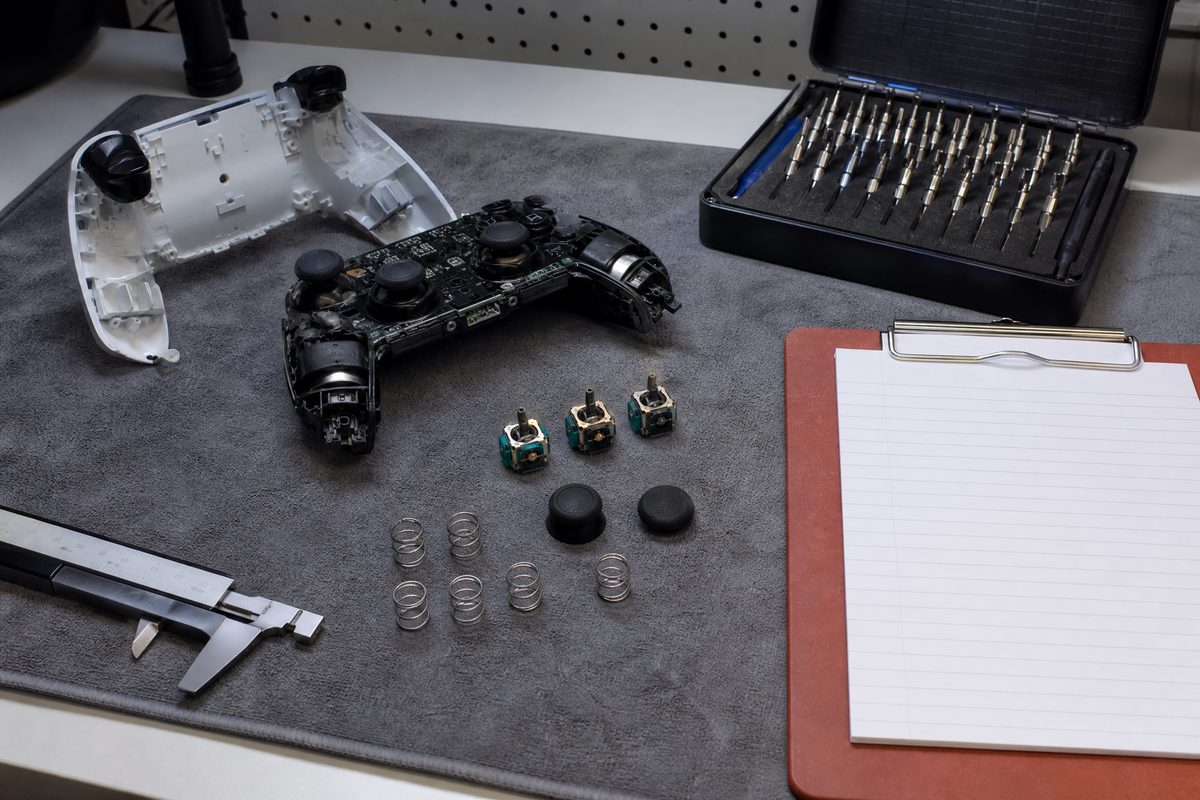
A controller partly disassembled on a workbench beside precision screwdrivers and a notebook of input timings Note
Cross-game · 212 titles

The hold problem: the most common failure and the cheapest to fix

Sustained holds appear in eighty-four per cent of the archive and offer a toggle alternative in nineteen per cent. The gap between those two figures is the largest single accessibility failure we measure.

Holds present 84%Toggle offered 19%

View across an aircraft cowling towards mountains, used as an illustration of device support Note
Device survey · 212 titles

Which games can see an adaptive switch box at all

Before mapping comes detection. Twenty-two per cent of the archive never enumerates the device, which means no amount of rebinding will help, and no storefront page mentions it.

Not detected 22%Full support 34%
01

Locked bindings cluster on the actions that hurt most

Across the archive, actions locked out of rebinding are three times more likely to be holds, chords or double-taps than the average action. Whatever the reason, the effect is that the hardest inputs are the ones you cannot move.

Finding
02

Silence is worse than refusal

Forty-one games in the archive ignore an attempt to rebind a locked action without saying anything. Testers consistently read this as a bug and retry it, sometimes for several minutes, which is a worse outcome than a plain message.

Finding
03

Toggle options are almost always in the wrong menu

Where a toggle alternative exists, it sits in a separate accessibility screen in seventy-eight per cent of cases rather than beside the binding it modifies. Players who need it frequently never find it.

Finding
04

Full rebinding is not correlated with budget

Small teams ship complete rebinding at roughly the same rate as large ones. Red Pillars was made by three people and does everything right; several far larger games in the same bench do not.

Finding
05

Peak input count has risen, hold count has risen faster

Median peak simultaneous inputs across the archive has moved from 3.4 to 4.5 over four years. Median sustained holds has moved from 1.2 to 2.5, which is the more consequential of the two changes.

Finding

What the bench cannot tell you

Four testers is four pairs of hands. The figures here are properties of the software — input counts, locked bindings, device detection — and those transfer exactly. Comfort does not. A scheme that four people found manageable may still be unusable for you, and the archive is deliberately built so that you can check the underlying numbers rather than trust our comfort.

Where a game's behaviour changed after a patch, the review is re-run and the date of the re-run is recorded. Twelve reviews in the archive currently carry a superseded figure with the original kept visible.

  • Counted Bindings, peaks, holds, chords
  • Tested Detection on four devices
  • Recorded Named locked actions
  • Reported Tester notes, unedited
  • Not claimed That any of it is comfortable for you